
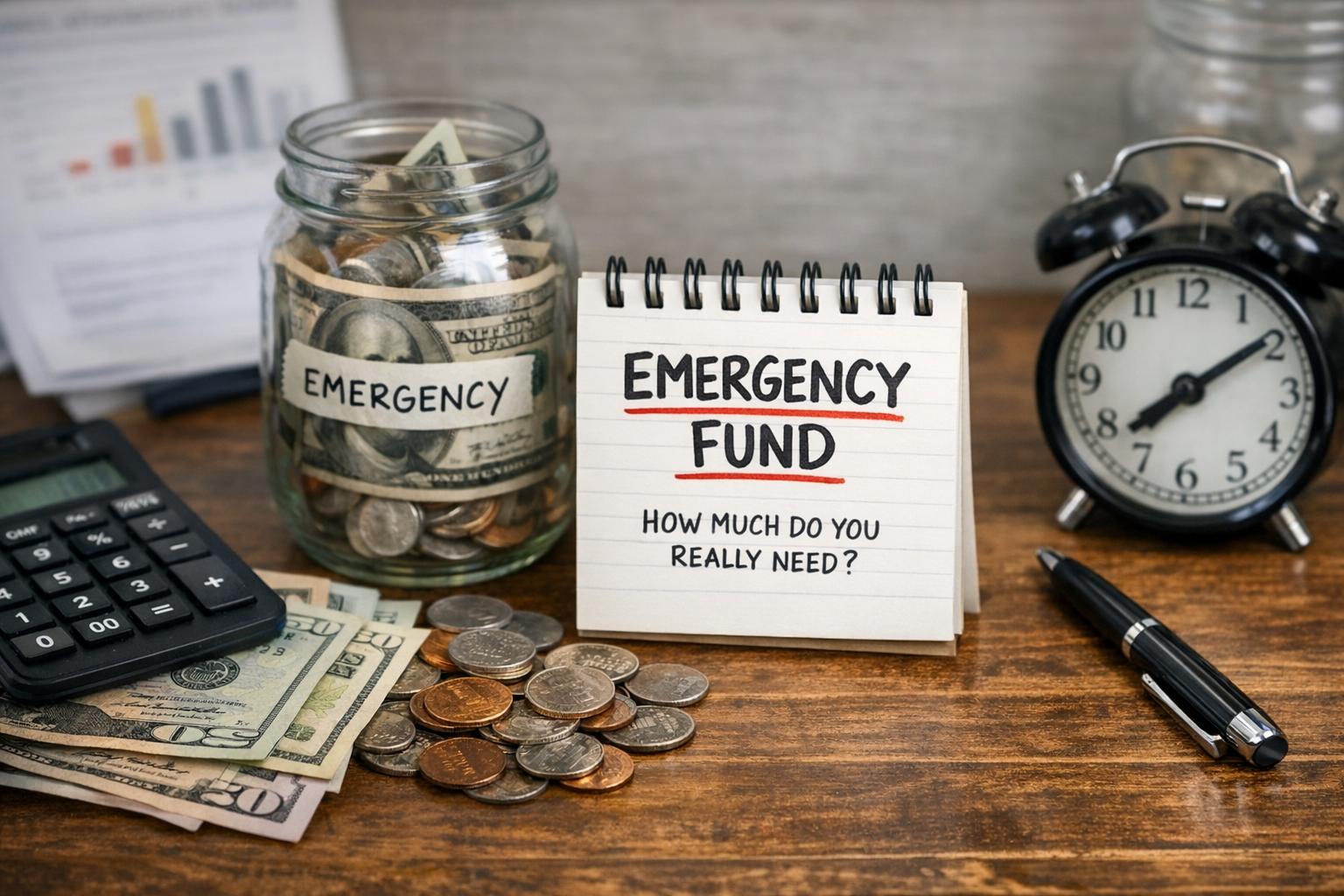
An emergency fund is money reserved for unplanned expenses or a temporary drop in income. Its purpose is practical: keep essential bills paid, reduce dependence on expensive debt, and provide time to make sensible financial decisions after circumstances change.
For many households, a reasonable target is three to six months of essential expenses. That range is a starting point, not a fixed rule. A salaried employee with strong insurance and another earner in the household may be comfortable near the lower end. A freelancer, business owner, or sole provider may need nine months or more.
The target should reflect the household’s bills and financial risks rather than a round number copied from a personal finance checklist. Someone spending $2,000 a month does not need the same cash reserve as a family whose essential costs are $7,000. The source and reliability of income matter just as much as the amount spent.
What an Emergency Fund Should Cover
An emergency fund pays for costs that are both unplanned and necessary. The expense should require prompt attention and have a real effect on health, income, housing, safety, or basic family responsibilities.
Common uses include urgent car repairs, medical bills, insurance deductibles, emergency dental treatment, essential home repairs, and travel caused by a family illness. The fund can also replace income during unemployment, unpaid medical leave, reduced working hours, or a slow period for a self-employed worker.
Not every inconvenient bill qualifies as an emergency. A broken heating system in winter probably does. A discounted television does not, even if the sale ends on Sunday. The distinction sounds obvious, but access to a large savings balance can blur the line between need and preference.
Income emergencies
A loss of income often creates the greatest demand on emergency savings. A single repair may cost a few hundred or a few thousand dollars. Unemployment can require several months of rent, food, insurance, transportation, and debt payments.
Income problems do not always involve a complete job loss. An employer may reduce hours, commissions may fall, a client may delay payment, or illness may prevent someone from working. Gig workers can also lose access to a platform or face sudden changes in demand.
Because income emergencies can continue for an unknown period, the fund should not be based only on the cost of common household repairs. A $2,000 reserve may handle a damaged appliance but will not cover many months without wages.
Urgent household expenses
Homeowners may need cash for failed plumbing, electrical faults, roof damage, heating repairs, or water removal. Insurance may cover part of a loss, but payment can take time and deductibles still apply. Some repairs also fall outside policy coverage because they result from normal wear.
Renters face fewer building repair costs, though they still need money for temporary accommodation, damaged belongings, moving costs, or a sudden rent increase. A rental deposit and the first month’s rent on a new property can consume a large sum at short notice.
Medical and family costs
Health insurance does not mean treatment is free. Deductibles, copayments, prescriptions, travel, accommodation, and unpaid time away from work can create a substantial bill. Family members may also need care that is excluded from a policy.
Parents should account for childcare and school transport during disruptions. People supporting older relatives may need to pay for care, home assistance, or urgent travel. If that support would continue after a job loss, it belongs in the emergency budget.
What the Fund Is Not Meant to Pay For
Predictable costs should normally be handled through the monthly budget or separate sinking funds. A sinking fund is money saved gradually for an expense expected at a later date. Common examples include annual insurance premiums, vehicle servicing, property taxes, school fees, holidays, and planned home maintenance.
A bill does not become an emergency simply because it arrives infrequently. If an insurance premium is due every October, the payment date is known. Dividing the annual premium by 12 and saving that amount each month prevents the bill from draining emergency cash.
Keeping planned savings separate has two benefits. It makes the true emergency balance easy to check, and it reduces the temptation to spend money allocated to a future need. Separate accounts or bank subaccounts can work well without making the system fussy.
Emergency money is also not an investment fund. It should not be used to buy shares after a market decline, make a down payment on a rental property, or speculate on cryptocurrency. Those decisions may have financial merit in another context, but they expose money intended for basic protection.
How Much Emergency Cash Do You Need?
The standard calculation is straightforward:
Essential monthly expenses × number of months = emergency fund target
A household with essential monthly expenses of $3,000 would have the following targets:
| Coverage period | Target amount | Typical use |
|---|---|---|
| One month | $3,000 | A starter buffer for smaller bills or a short income delay |
| Three months | $9,000 | A common target for stable salaried households |
| Six months | $18,000 | More protection for families, one-income homes, or variable work |
| Nine months | $27,000 | A larger reserve for irregular income or a longer job search |
| Twelve months | $36,000 | May suit business owners, specialist workers, or people nearing retirement |
The calculation should use essential expenses rather than normal discretionary spending. Housing, food, utilities, transportation, insurance, healthcare, minimum debt payments, and necessary family support usually remain. Restaurant meals, leisure travel, premium subscriptions, and optional shopping can often be reduced.
Still, an emergency budget should remain realistic. It is easy to build a very low estimate on paper by assuming every optional cost disappears immediately. Real households do not always adjust that quickly. Contracts may continue, cancellation fees may apply, and job hunting can create new expenses.
Use two monthly spending figures
Some households benefit from calculating two amounts. The first is a bare-minimum budget covering the lowest practical level of spending. The second is a reduced normal budget that allows for modest flexibility and costs that may take time to cut.
Suppose a family normally spends $5,200 a month. Its reduced budget may be $4,100, while the bare-minimum version is $3,500. A six-month reserve based on the reduced figure would be $24,600. The family could also view $21,000 as its minimum threshold.
This approach produces a useful range rather than pretending one number will suit every type of emergency. It also helps the household decide how spending should change if income stops.
Add likely one-time costs
A monthly calculation may not account for a large deductible or urgent repair. It can be sensible to add a separate amount for a likely one-time bill, particularly when the household owns an older vehicle or property.
If six months of expenses equal $18,000 and the home insurance deductible is $2,500, a target near $20,500 may offer better protection. There is no need to add the maximum cost of every imaginable event. Focus on risks with a reasonable chance of occurring and expenses the household would have to pay promptly.
Factors That Change the Target
Income reliability
Predictable wages usually support a smaller reserve than irregular earnings. A permanent employee with consistent pay may reasonably aim for three to six months. A commission-based worker whose monthly income rises and falls may prefer six to nine months.
Job security should not be treated as permanent. Employers restructure, industries contract, and personal health can change. A stable role lowers risk but does not remove it. Even public-sector employees can encounter payroll delays, unpaid leave, or family events that interrupt work.
Number of earners
Two earners can make a household more resilient, provided their incomes do not depend on the same employer or industry. If one person loses a job, the other salary may continue covering part of the bills.
A couple working for the same company has greater shared risk. The same applies when both work in closely related fields affected by the same business cycle. Their emergency target may need to resemble that of a one-income household rather than a household with fully independent earnings.
Single-income families often need a larger reserve because one employment event can remove all wage income. This is especially relevant where one partner provides unpaid childcare and cannot enter paid work quickly.
Dependents
Children and adults who rely on the household reduce the ability to cut spending during a crisis. Food, medication, childcare, school travel, and care services may continue at much the same level even after income falls.
Parents may also face higher medical bills and more frequent short-notice absences from work. A larger reserve can account for both the direct expense and the income lost while providing care.
Insurance protection
Insurance transfers part of a financial risk to an insurer, but cash is still needed. Policies have deductibles, exclusions, claim procedures, and waiting periods. A household may have to pay contractors, medical providers, or temporary accommodation costs before receiving reimbursement.
Review the deductibles on health, vehicle, homeowners, and renters policies. The emergency account should be able to cover the largest deductible that could reasonably become due, along with associated costs.
Disability or income-protection insurance can reduce the need for a very large cash reserve, though benefit payments may not begin for several weeks or months. The fund must bridge that waiting period. It should also account for the portion of earnings the policy does not replace.
Debt obligations
High monthly debt payments increase the amount that must remain available during unemployment. Lenders may offer temporary hardship arrangements, but borrowers should not assume approval in advance.
Minimum payments on credit cards, personal loans, student loans, and vehicle finance belong in the emergency budget unless a formal payment pause is guaranteed. Mortgage payments or rent remain central because missed housing payments can have serious consequences.
Access to other assets
A household with cash deposits, short-term government securities, or taxable investments has more financial capacity than one with no assets outside a retirement plan. Even so, not all assets should be treated as equal.
Shares may lose value just as employment conditions weaken. Retirement withdrawals may incur tax and penalties. Property takes time to sell, and personal possessions rarely fetch their estimated value during a rushed sale.
Other assets can support the emergency plan, but some cash should remain readily available. A forced sale is rarely a pleasant bargaining position.
Emergency Fund Targets by Employment Type
Salaried employees
Workers with regular salaries often use three to six months of essential spending as their target. The lower end may suit someone with low fixed costs, good benefits, and another independent earner at home.
The higher end may suit workers in an industry with frequent layoffs, parents with dependents, or employees whose skills would take time to place with another company. Notice periods and severance pay can be considered, though neither should be assumed unless contractual terms are clear.
Freelancers and contractors
Freelancers often face both income variation and payment delays. A client may approve an invoice late even after the work has been completed. Six to nine months of household expenses may be more appropriate, supported by a separate account for taxes and business costs.
Personal and business reserves should not be mixed. The business may need to pay software fees, professional insurance, rent, subcontractors, or tax while personal bills continue. One pot of money can look reassuring until both sides require cash at once.
Contractors should consider the normal gap between assignments. If finding and starting a new contract usually takes four months, a three-month fund is probably too small. The target should cover the expected gap plus some room for delay.
Business owners
Business owners need separate household and company plans. A business reserve pays operating costs, while a personal fund pays housing, food, insurance, and family expenses. Using the company account as a personal backup can create accounting, tax, and legal problems.
Owners whose income comes mainly from one customer face extra concentration risk. Losing that customer could reduce business revenue and personal income at the same time. A reserve near nine to twelve months may be reasonable until the customer base becomes broader.
Seasonal workers
Seasonal employees need to distinguish between a known off-season and an emergency. Money saved for the usual off-season is planned income replacement, not emergency savings. A separate reserve is still needed for medical bills, repairs, or a season that produces less work than expected.
The annual budget should spread peak-season earnings across the full year. Emergency cash then sits behind that plan rather than funding routine low-income months.
Retirees
Retirees do not face unemployment in the usual sense, but they still encounter medical bills, home repairs, family needs, and delayed pension or benefit payments. Cash also reduces pressure to sell investments after market declines.
The correct reserve depends on how much guaranteed income covers regular spending. Someone whose pension and government benefits pay nearly all essential bills may need less cash than a retiree drawing heavily from investments each month.
Many retirees hold one to two years of planned portfolio withdrawals in cash or short-term fixed-income assets. That holding serves a broader purpose than a standard emergency account, so it should be assessed as part of the retirement income plan.
Start With a Smaller Milestone
A three- or six-month target can be discouraging when savings are near zero. A smaller first milestone provides useful protection while the larger reserve develops.
The starter amount might be $500, $1,000, one insurance deductible, or one month of essential expenses. The best choice depends on local costs and common household risks. A family with an older car may set the first target at the cost of a typical major repair. A renter without a vehicle may need less at the start.
A starter fund can prevent a modest problem from moving onto a credit card. It does not replace the longer-term target, but it creates breathing room. Progress is easier to maintain when the first finish line is visible.
Where to Keep Emergency Savings
Emergency money should be safe, accessible, and separate from routine spending. Interest matters, but reliability matters more. The account should allow withdrawals without exposing the principal to market losses.
High-yield savings accounts
A high-yield savings account is a common choice. It can earn interest while allowing relatively prompt transfers. Check for account fees, minimum balances, withdrawal rules, transfer delays, and deposit insurance eligibility.
An account held at a separate bank can reduce casual spending because the balance is not visible beside the checking account. The trade-off is that transfers may take a day or two. Keeping a smaller buffer at the main bank can cover immediate bills while the larger transfer clears.
Money market deposit accounts
A money market deposit account may offer competitive interest and access through transfers, checks, or a debit card. Terms differ by institution, so customers should check transaction rules and balance requirements.
A money market deposit account is not the same as a money market mutual fund. The mutual fund is an investment product and may not receive the same deposit protection. The distinction is easy to miss because the names are rather similar.
Short-term deposits and government securities
Part of a larger emergency reserve can be held in short-term deposits or government securities that mature at staggered dates. This arrangement may provide a better return, but it requires planning.
Money that may be needed immediately should not be locked behind a long maturity or a heavy early-withdrawal penalty. One approach is to keep one or two months in a savings account and place the remaining amount in short maturities.
Physical cash
A modest amount of cash at home can help during a power failure, bank outage, or natural disaster that disrupts card payments. The amount depends on local conditions, though it usually represents only a small share of the full reserve.
Large holdings of physical cash face theft, fire, loss, and no interest. Home insurance may provide little coverage for cash. Store any household cash securely and tell another trusted adult where it is kept.
Assets that usually do not belong in the core fund
Stocks, long-term bond funds, cryptocurrency, collectibles, and retirement accounts are generally poor places for the core reserve. Their value may fall, access may take time, or withdrawals may trigger tax.
A broad investment portfolio can act as a secondary resource, but the first layer of emergency money should not depend on favorable market prices. Emergencies have a habit of arriving without checking the stock chart.
How to Calculate Essential Monthly Expenses
Review at least three to six months of bank and card statements. A full year is better when spending changes by season. Group transactions into housing, utilities, food, transport, insurance, healthcare, debt, childcare, and family support.
Use actual payments rather than memory. People tend to recall rent and loan payments accurately while overlooking smaller recurring charges. Those smaller amounts can add up to a material monthly total.
Housing
Include rent or mortgage payments, property charges, basic maintenance, and any required association fees. Homeowners should average annual property taxes and insurance premiums if they are not included in the mortgage payment.
Utilities and communication
Electricity, heating, water, basic internet, and phone service generally remain necessary. Use an annual average where seasonal bills vary. A winter heating bill can be much higher than the figure shown by a summer statement.
Food and household supplies
Base the estimate on groceries and basic household products rather than the lowest theoretical food budget. Restaurant spending can be removed or reduced, but a realistic grocery figure should remain.
Transportation
Include fuel, public transport, vehicle payments, insurance, registration, and an average amount for maintenance. Transportation costs may remain high during a job search because interviews, temporary work, and training require travel.
Healthcare and insurance
Count regular prescriptions, treatment, premiums, and average out-of-pocket expenses. If employer coverage would end after a job loss, estimate the cost of replacement insurance rather than using the current payroll deduction.
Irregular bills
Convert annual and semiannual bills into monthly amounts. If car maintenance costs $1,200 a year, include $100 a month. If professional registration costs $600 each year and must remain active during unemployment, include $50 a month.
After calculating the monthly total, multiply it by the chosen number of months. Then compare that result with likely deductibles and one-time risks. The final target should be easy to explain and update.
How to Build the Fund
Regular automatic transfers are usually more reliable than waiting to see what remains at the end of the month. Schedule the transfer shortly after payday, when cash is available.
The amount should be sustainable. An aggressive transfer that causes overdraft fees or forces credit-card use works against the purpose. Starting with a smaller sum and increasing it after a few pay cycles is often more practical.
Bonuses, tax refunds, gifts, rebates, and proceeds from selling unused items can speed up progress. Households with irregular income can save a percentage of every payment rather than a fixed amount. A freelancer might direct 5% or 10% of each invoice to emergency savings after setting aside tax.
Recurring expenses also deserve review. Cancelling a service that is rarely used creates a monthly saving that can continue automatically. There is no need to strip all enjoyment from the budget. A plan that lasts is more useful than a harsh plan abandoned after six weeks.
Track progress by months, not just dollars
A dollar target can feel abstract. Measuring the balance in months of expenses gives it context. If essential spending is $3,000 and the account holds $6,000, the household has two months of coverage.
This measure also adjusts naturally when expenses change. A $12,000 reserve equals four months at $3,000 a month but only three months after costs rise to $4,000.
Emergency Savings Versus High-Interest Debt
High-interest debt creates a genuine trade-off. Paying down a credit-card balance reduces interest, but sending every available dollar to the card leaves no cash for the next repair or medical bill.
A common approach is to build a starter reserve, focus extra payments on expensive debt, and then expand the fund after the balance falls. The starter reserve might cover one insurance deductible or a typical car repair.
The correct balance depends on the interest rate, job stability, family obligations, and chance of a near-term expense. A household facing an expected employment change may keep more cash even while paying high interest. Someone with secure income and a 25% card rate may place greater weight on debt reduction.
Using every dollar of savings to repay debt can create a cycle. The card balance falls, an emergency occurs, and the charge goes straight back onto the card. A modest cash buffer helps break that pattern.
When More Than Six Months May Be Sensible
A reserve of nine to twelve months may suit people whose income would take a long time to replace. This can include senior professionals, workers in narrow occupations, residents of areas with fewer employers, and people planning a career change.
Households may also prefer more cash if they rely on one income, have ongoing medical needs, own an older home, or receive much of their income from one client. People nearing retirement may value added liquidity because a job loss could arrive close to the planned retirement date.
A larger balance carries an opportunity cost because cash often earns less than long-term investments. That cost should be weighed against the chance and impact of income disruption. The highest possible balance is not automatically the best answer.
When Less Than Six Months May Be Reasonable
A smaller reserve may work for a household with multiple independent incomes, low fixed expenses, good insurance, and accessible assets outside retirement accounts. Strong contractual severance or reliable government benefits may also reduce the required cash amount.
Even then, keeping a basic reserve is sensible. Credit lines can be reduced, investment markets can fall, and reimbursements can be delayed. A household should be able to pay immediate bills without borrowing or selling assets under pressure.
How to Decide Whether to Use the Fund
Before withdrawing money, ask three questions:
- Is the expense necessary for health, safety, housing, work, or essential family care?
- Was the expense genuinely unplanned, or should it have been included in the regular budget?
- Would delaying payment create a larger cost or serious practical problem?
If the answer supports a withdrawal, use the money without treating it as a planning failure. The account exists to be used when a qualifying expense occurs.
Some cases sit in a grey area. A car repair may be necessary for commuting, while replacing the vehicle with a more expensive model is partly discretionary. Paying for urgent roof repair may qualify, while a full cosmetic renovation probably does not.
Write a short household policy if repeated decisions are difficult. The policy might state that the fund covers loss of income, urgent medical treatment, essential repairs, deductibles, and emergency family travel. Clear rules reduce arguments and impulse withdrawals.
Rebuilding After a Withdrawal
Once the immediate event has passed, calculate the new balance and restart regular contributions. Rebuilding may take time, especially if the emergency also caused debt or reduced income.
Return to the previous automatic transfer where possible. Directing part of future bonuses or refunds to the account can shorten the recovery period. If the event exposed a recurring weakness, update the target. A repair that revealed an aging roof may justify a separate home-maintenance fund.
There is no need to feel that using the account erased earlier progress. The savings performed their job. Without them, the same event could have produced interest charges, missed payments, or the sale of investments.
Common Emergency Fund Mistakes
Using total income instead of expenses
Emergency targets are normally based on spending, not gross salary. A person earning $6,000 a month may require only $3,500 for essential bills. Using salary can overstate the target and make saving appear harder than it is.
Keeping the money in a volatile asset
An investment may rise over time, but it can also fall shortly before the money is needed. The core reserve should maintain its value and remain easy to access.
Ignoring transfer delays
An account may advertise easy access yet take several business days to transfer funds. Test the transfer process with a small amount before an emergency occurs. Keep enough in the main bank account to handle an immediate payment.
Mixing planned and emergency savings
Using one account for holidays, annual bills, repairs, and unemployment makes the available emergency balance hard to judge. Separate labels or subaccounts keep each purpose clear.
Failing to update the target
A reserve calculated before a move, new child, mortgage, or job change may no longer match current expenses. Review the number after major household changes and at least once each year.
Assuming credit will always be available
Credit-card issuers and lenders may reduce available credit after income falls or economic conditions weaken. Borrowing also adds interest to an already difficult period. Credit can support a backup plan, but it should not replace cash savings.
Reviewing the Fund Each Year
An annual review does not need to become a major financial project. Recalculate essential monthly expenses, check insurance deductibles, confirm account access, and compare the current balance with the chosen coverage period.
Inflation can reduce the buying power of a fixed balance. If essential expenses rise from $3,000 to $3,300 a month, a six-month target rises from $18,000 to $19,800. Increasing automatic contributions can close the gap gradually.
Life events may call for an earlier review. Recheck the target after changing jobs, becoming self-employed, buying a home, adding a dependent, taking on debt, moving to one income, or losing insurance coverage.
A Practical Framework for Setting Your Target
Begin with one month of realistic essential expenses. Add likely one-time costs, such as the largest insurance deductible or a common vehicle repair. Then choose the number of months based on income reliability and household obligations.
A stable two-income household may choose three months. A one-income family may prefer six months. A freelancer or business owner may choose nine months, with a separate reserve for business costs.
Keep the core amount in an insured savings or deposit account with prompt access. Automate contributions, measure progress in months of expenses, and rebuild after any withdrawal. Review the figure each year rather than treating it as permanent.
The right emergency fund is large enough to protect essential spending without holding excessive cash that could serve other financial goals. It should reflect real bills, realistic employment risk, insurance terms, and family responsibilities. For many people, three to six months remains a sound range, but the household calculation matters more than the rule of thumb.


