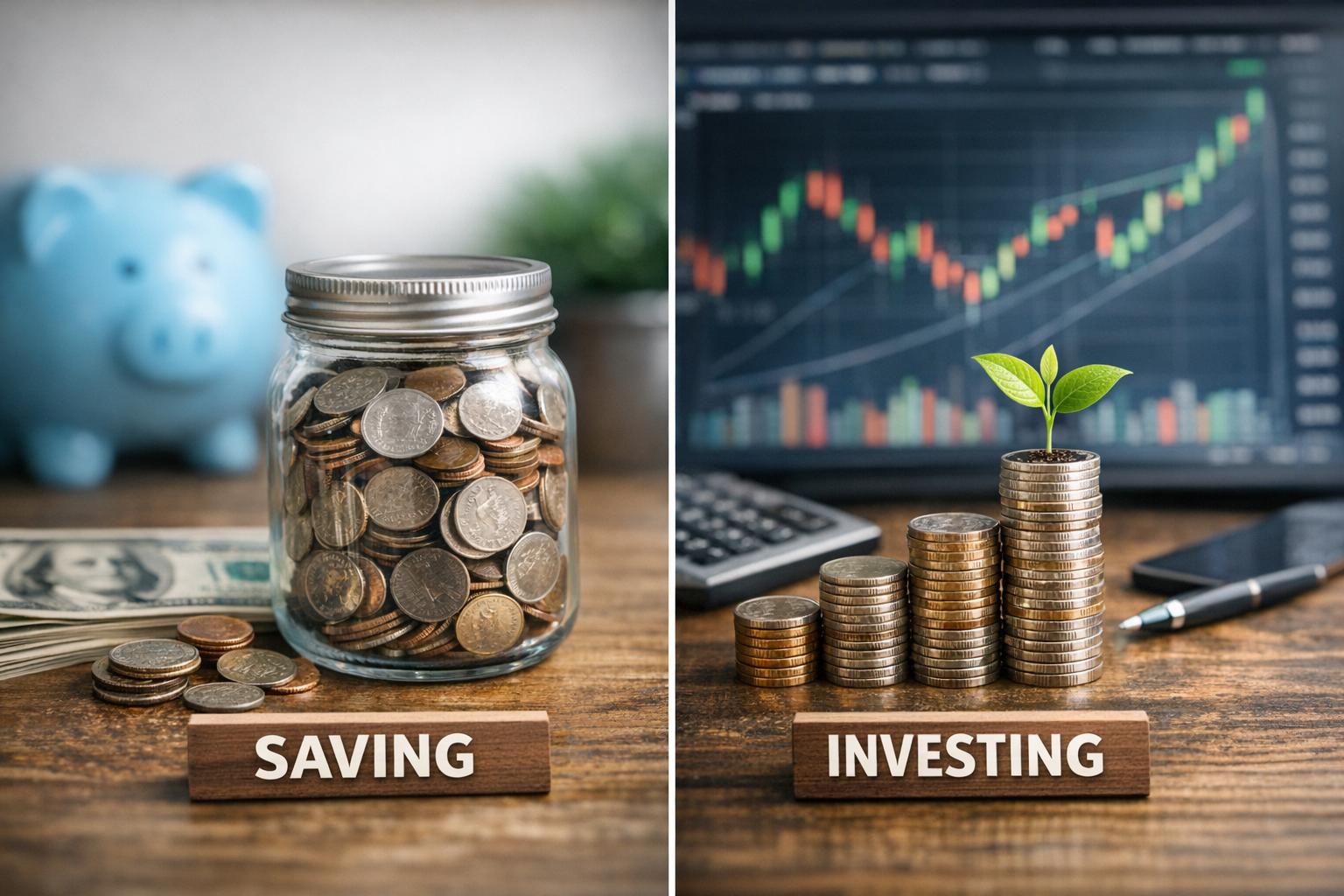
How much of your income you should save depends on your regular expenses, debt, employment security, age, financial goals, and access to workplace benefits. No single savings percentage suits every household. A worker with a high salary and low housing costs may save 30% or more, while a household paying for childcare, medical care, or expensive debt may need to begin at 2% to 5%.
For many people, saving 10% to 20% of take-home income is a reasonable long-term target. That range is a planning guide, not a pass-or-fail test. A smaller percentage maintained for years can produce better results than an ambitious target that causes cash shortages and is abandoned after three months.
The amount also depends on what counts as saving. Retirement contributions, emergency cash, a home deposit, and money reserved for annual bills serve different purposes. Placing all of them in one category can make a savings rate look healthy even when the household has no cash available for an urgent repair. A sound plan separates each purpose and assigns money according to the date it may be needed.
What Percentage of Income Should You Save?
A practical answer for many households is to begin with the percentage that can be maintained without missing bills or returning to credit cards. The rate can then rise as debt falls, earnings increase, or temporary costs end.
| Savings rate | How it may be used | Who may find it realistic |
|---|---|---|
| 2% to 5% | Starter emergency fund or workplace retirement contribution | People with tight cash flow, high housing costs, or expensive debt |
| 10% | Retirement plus a small cash reserve | Workers building a regular savings habit |
| 15% | Long-term retirement funding, often including employer payments | People who begin saving early or midway through their careers |
| 20% | Retirement, emergency cash, and medium-term goals | Households with manageable fixed expenses |
| 30% or more | Early retirement, a large property deposit, or faster wealth accumulation | Higher earners, dual-income households, or people with low fixed costs |
These ranges do not account for every household circumstance. Someone receiving a generous employer pension may need to put less personal income into retirement accounts than a self-employed worker without workplace benefits. A homeowner planning a major repair may temporarily direct more money to cash. A parent paying nursery fees may save less for several years and raise the rate after those fees end.
The useful question is not only, “What percentage should I save?” It is also, “What must this money pay for, and when?” That distinction determines the amount, account type, and acceptable level of investment risk.
Should You Use Gross Income or Take-Home Income?
Savings percentages can be calculated from gross income or take-home income. Gross income is earnings before tax, insurance premiums, pension contributions, and other payroll deductions. Take-home income is the amount deposited into your bank account after those deductions.
Retirement guidance often uses gross income because workplace pension contributions are stated as a percentage of salary. Household budgets usually use take-home pay because that is the money available for bills, purchases, and transfers after payroll deductions.
Consider a worker earning $60,000 before tax and receiving $45,000 after deductions. Saving $6,000 a year equals 10% of gross income but about 13.3% of take-home income. Both calculations are correct, though they answer different questions.
Choose one method and use it consistently. Switching between gross and net figures can distort progress. If you calculate a household budget from take-home pay, note pre-tax retirement contributions separately. This prevents retirement money from disappearing from the calculation simply because it never entered the current account.
What Counts as Saving?
Saving includes money set aside for future use rather than current consumption. Even so, each type should be tracked separately because the money has a different job.
Short-Term Savings
Short-term savings pay for expenses expected within the next few years. Common examples include holidays, appliances, home maintenance, a vehicle, professional fees, and annual insurance premiums. This money normally belongs in an accessible savings account or another low-risk cash product.
Planned expenses are not emergencies. A boiler that may need replacement within two years is a foreseeable household cost. Building a home-maintenance fund keeps that expense from consuming the emergency reserve or going onto a credit card.
Emergency Savings
An emergency fund covers unplanned costs or a temporary interruption in earnings. It may pay for housing, food, utilities, medical care, insurance, transport, and minimum debt payments after a redundancy, illness, or urgent repair.
The fund should remain separate from ordinary spending money. If it shares an account with holiday savings and monthly bills, it becomes difficult to tell how much protection is actually available. A separate account also adds a small pause before withdrawal, which is sometimes enough to prevent an ordinary purchase from being labelled an emergency.
Retirement Savings
Retirement contributions are intended to support spending after employment income stops or falls. They may go into an employer pension, an individual retirement account, or a taxable investment account. Since retirement may be decades away, this money is often invested rather than held entirely in cash.
Account rules matter. Some retirement accounts offer tax relief but restrict withdrawals or apply penalties before a stated age. Money that might be needed next year should not normally be placed in an account that cannot be accessed without cost.
Savings for Defined Goals
A house deposit, education costs, business capital, and a planned career break each require a target amount and date. The date affects how the money should be held. A deposit needed in 18 months generally calls for more stable holdings than money intended for use in 12 years.
Attaching a name to an account can improve discipline. “House deposit” gives clearer instructions than “other savings.” It also makes withdrawals easier to assess: taking $2,000 from the house account means delaying or reducing that purchase, not borrowing from a vague pool of spare money.
The 50/30/20 Budget Guideline
The 50/30/20 budget divides take-home income into three broad groups:
- 50% for needs: housing, basic food, utilities, transport, insurance, healthcare, and required debt payments.
- 30% for wants: restaurants, entertainment, hobbies, optional travel, subscriptions, and nonessential purchases.
- 20% for saving and extra debt repayment: retirement contributions, emergency cash, investments, and payments above the required minimum.
This model is simple, which explains much of its popularity. It can show whether fixed costs consume too much income and gives saving an assigned place in the budget. It should not be treated as a rigid rule, however.
Housing alone may consume 40% or more of take-home pay in an expensive city. Lower earners may spend nearly all their income on basic needs even with careful budgeting. Parents may face several years of childcare costs that do not fit neatly within the 50% allowance. In such cases, a 20% savings target may be unrealistic until income rises or a major expense ends.
Categories can also become debatable. A basic car may be necessary for commuting, while a costly model is partly a discretionary purchase. Internet service may be required for work, though the fastest entertainment package is not. There is no need to conduct a courtroom hearing over every grocery receipt. Apply the categories consistently and focus on spending that materially affects the plan.
A household that cannot save 20% may use a modified split, such as 65% for needs, 25% for wants, and 10% for saving. The proportions can change later. The value of the model lies in assigning income before it is spent, not in meeting three exact numbers.
Is Saving 10% of Income Enough?
Saving 10% can be a sound starting rate, particularly for a younger worker who already has some emergency cash and receives employer retirement contributions. It creates regular progress without placing the budget under severe pressure.
Whether 10% is enough over a full career depends on when saving begins, investment performance, retirement age, pension benefits, and expected spending. A person who starts at age 23 and receives an employer contribution may be in a very different position from someone beginning at age 48 with no prior retirement assets.
A 10% rate may also need to fund several goals at once. If half goes to a home deposit and half goes to retirement, only 5% is building retirement assets. That may be appropriate for a period, but the division should be visible.
People who begin at 10% can schedule small increases. Raising the rate by one percentage point after each annual pay review can move it to 15% without one sharp reduction in disposable income. The same approach works after a loan is repaid: redirect the old payment into savings before it becomes ordinary spending.
Is Saving 15% of Income Enough?
A rate of 15% of gross income is often used as a retirement planning benchmark. It commonly assumes that contributions begin fairly early, continue through most working years, and remain invested for long-term growth.
The figure may include both employee and employer contributions. If an employee contributes 10% and an employer contributes 5%, the combined retirement rate is 15%. It is still useful to record the employee and employer amounts separately. Employer payments may depend on remaining with the company, meeting service conditions, or contributing a minimum amount.
Fifteen percent is not a guarantee of a chosen retirement income. Investment returns vary, employment gaps occur, and inflation reduces future purchasing power. People planning to stop work early may require a higher rate. Those with a strong defined-benefit pension or low expected retirement spending may require less from personal accounts.
A retirement forecast can test whether 15% appears sufficient. The forecast should include current balances, annual contributions, fees, inflation, expected benefits, and a cautious range of investment returns. Treating one optimistic return estimate as certain can leave a large shortfall later.
What Saving 20% of Income Can Cover
Saving 20% provides room to address more than retirement. A household might direct 12% to retirement, 5% to an emergency fund, and 3% to a vehicle replacement account. After the emergency reserve reaches its target, that 5% can move to investing, a property deposit, or another planned expense.
A 20% rate may also shorten the time required to reach medium-term goals. Still, the percentage should not come at the cost of unpaid bills, inadequate insurance, or repeated use of expensive credit. Saving money at a low interest rate while carrying a growing credit card balance at a much higher rate rarely improves the household balance sheet.
People with irregular earnings may not save exactly 20% every month. A contractor might save 8% during a slow month and 30% after a large payment. Measuring the rate over a quarter or full year gives a more accurate result.
How Much Should You Save for Retirement?
Retirement saving should begin with the income you expect to need, the age at which work may stop, and the assets already accumulated. A standard percentage offers a starting point, but the required contribution rate comes from the gap between current resources and future spending.
Start by estimating retirement expenses in current money. Housing, food, utilities, transport, tax, insurance, healthcare, and leisure should be included. Some work-related costs may disappear, while healthcare or home-support costs may rise. Mortgage payments may end before retirement, though property maintenance and taxes continue.
Subtract expected income from government benefits, workplace pensions, rental property, or other dependable sources. The remaining gap must be funded by personal retirement assets or ongoing work.
Claim the Full Employer Match
If an employer matches retirement contributions, contributing enough to receive the full match is usually a sensible early priority. The match forms part of employee compensation. Failing to claim it means accepting less of the available benefit.
Plan terms should be checked before relying on the employer amount. Some contributions become fully owned only after a worker completes a stated service period. Others may be paid according to a formula that changes with employee contributions.
Account for a Late Start
Someone beginning retirement saving in their forties or fifties may need to contribute more than 15%. Other options include delaying retirement, lowering planned spending, using catch-up contribution allowances where available, or combining these measures.
A late start does not make saving pointless. It makes accurate projections and controlled spending more relevant. Ten years of disciplined contributions can still produce a material retirement balance, especially where tax relief and employer payments apply.
Review Retirement Contributions After Pay Rises
A raise offers a relatively painless time to increase saving. If take-home pay rises by $200 a month, directing $100 to retirement still leaves $100 for current spending. This reduces lifestyle inflation without requiring the household to live on less than before.
Bonuses can also be divided rather than treated as fully spendable. Part may go to retirement, part to a near-term goal, and part to current use. A pre-agreed division removes the need to make the decision after the money reaches the account.
How Much Should Be in an Emergency Fund?
Emergency funds are normally measured in months of required expenses rather than as a percentage of income. A common target is three to six months of basic living costs. That does not mean three to six months of salary.
If a household earns $6,000 a month but requires $3,500 for housing, food, utilities, insurance, transport, healthcare, and debt minimums, a three-month reserve would be $10,500. A six-month reserve would be $21,000.
The proper target depends on income reliability and household risk. A dual-income household with stable employment may be comfortable near the lower end. A self-employed worker, commission-based employee, single-income family, or person with irregular medical costs may prefer six to twelve months.
Build the Fund in Stages
A large emergency target can take years to reach. Building it in stages keeps other priorities moving:
- Save enough to cover a common urgent bill, such as a repair or insurance excess.
- Build one month of required expenses.
- Continue until the chosen three-, six-, or twelve-month target is reached.
During this period, it may still make sense to contribute enough to a pension to receive an employer match. After the emergency target is reached, the monthly transfer can be redirected rather than stopped.
Keep Emergency Money Accessible
Emergency cash should be held in an account with low risk and prompt access. A high-interest savings account or insured money market deposit account may be suitable, depending on local banking rules.
Shares, cryptocurrency, and other volatile assets are poor matches for immediate emergency needs. Their value may fall at the same time job conditions weaken, forcing a sale during a market decline. The emergency fund is intended to provide access and stability, not maximum returns.
Saving While Paying Off Debt
Debt interest affects how saving should be prioritised. Credit cards, payday loans, and some personal loans can charge rates well above the expected return from conventional investments. Paying down such balances may offer a predictable financial gain by preventing future interest charges.
A common order is to build a small cash buffer, make all required debt payments, claim an employer retirement match, and direct remaining money to expensive balances. Once those debts are cleared, their former monthly payments can fund the full emergency reserve and higher retirement contributions.
Low-rate debt requires a more balanced assessment. Paying extra on a fixed-rate mortgage may reduce risk and future interest, but increasing pension contributions may provide tax benefits and employer payments. The better use of money depends on the rates, account rules, taxes, time frame, and the household’s tolerance for debt.
Debt Avalanche and Debt Snowball Methods
The debt avalanche method directs extra payments to the balance with the highest interest rate while minimums continue on all other accounts. It usually reduces interest expense more efficiently.
The debt snowball method pays the smallest balance first, regardless of rate. Closing an account sooner may help some borrowers remain consistent. The mathematical advantage may be weaker, but a repayment method that is followed can outperform an ideal method that is repeatedly abandoned.
Whichever method is used, keep a basic reserve. Without cash, a routine repair can create new card debt and reverse several months of repayment.
How Age Can Affect Your Savings Rate
Age affects the time available for investment growth, but it should not be the sole basis for a contribution rate. Income, dependants, pensions, debt, health, and planned retirement age may matter just as much.
Saving in Your Twenties
Workers in their twenties may have lower earnings but more time for investment returns to compound. Beginning with 5% or 10% and raising the rate gradually can be productive. Establishing the habit early also makes retirement saving part of the normal payroll routine.
At this stage, cash reserves deserve attention too. Moving for work, rental deposits, vehicle repairs, and periods between jobs can create short-term demands. Putting every spare dollar into a restricted retirement account may leave too little accessible cash.
Saving in Your Thirties
Earnings often rise during the thirties, but housing and family costs may rise as well. A target near 15%, including employer contributions, may support retirement progress if the budget permits it.
This decade often involves competing goals: a property deposit, childcare, retirement, and debt repayment. Separate accounts and a written order of priorities help prevent the nearest expense from absorbing all available income.
Saving in Your Forties
People in their forties should compare retirement balances with projected needs and adjust contributions while there is still time for compound growth. A rate above 15% may be appropriate for someone behind schedule, though the required amount depends on pensions and current assets.
Some household costs may begin to fall during this period. Redirecting paid-off car loans, reduced childcare bills, or salary increases can raise saving without cutting established necessities.
Saving in Your Fifties and Sixties
As retirement approaches, contribution allowances, tax planning, healthcare, and the timing of pension benefits require closer review. Workers may need to save a larger share of earnings during their highest-income years.
The investment mix may also need adjustment. Money expected to fund near-term retirement spending should not rely entirely on assets that can experience sharp short-term declines. At the same time, retirement may last decades, so moving every account to cash can expose the household to inflation and longevity risk.
How Income Stability Changes the Target
A regular salary makes a fixed monthly transfer relatively easy. Variable income calls for a different system. Freelancers, business owners, seasonal workers, and commission-based employees may benefit from saving a percentage of every payment rather than committing to one fixed amount.
Taxes should be separated before personal saving is calculated. Self-employed income can appear larger than it is because payroll tax has not yet been deducted. Moving tax money to a separate account as payments arrive reduces the risk of spending funds owed later.
Variable-income households can base their ordinary budget on a conservative monthly figure. Earnings above that level can be divided among annual expenses, emergency reserves, retirement, and other goals. This creates room during slow periods without treating every strong month as permanent income.
A larger emergency fund may also be suitable. Six to twelve months of required expenses can provide more time to replace a client, find a new contract, or recover from seasonal weakness.
How Couples and Families Can Set a Savings Rate
Couples can calculate saving from combined household income or track each person’s rate separately. A combined rate works well for shared goals, while individual tracking can show whether both partners are building retirement assets in their own names.
This matters where one partner works fewer hours, takes parental leave, or pauses employment to provide care. The household may appear to save enough as a whole while most retirement assets accumulate under one person’s ownership. Account ownership, beneficiaries, pension rights, and local property rules should be reviewed rather than assumed.
Families should include irregular child-related expenses in the annual budget. School costs, clothing, activities, medical bills, and childcare changes can create uneven months. A monthly transfer into a family-expense account can smooth those costs and protect the emergency fund.
Regular budget discussions do not need to become lengthy financial meetings. A short monthly review of balances, upcoming bills, debt, and savings transfers is often enough. Clear numbers tend to be more productive than arguing about who bought the premium coffee beans.
Where Should You Put Your Savings?
The account should match the date the money will be used, the need for access, tax treatment, and acceptable risk.
| Time until use | Primary concern | Common account approach |
|---|---|---|
| Immediate to one year | Access and capital preservation | Insured savings or cash deposit account |
| One to three years | Stable value with some interest | Savings account, fixed-term deposit, or similar low-risk product |
| Three to seven years | Balance between stability and growth | Cash, high-quality bonds, or a cautious mixed portfolio where appropriate |
| Seven years or more | Long-term growth and inflation | Diversified investments, often through retirement or investment accounts |
A fixed date reduces the amount of investment risk that may be sensible. Someone buying a home next year cannot easily wait through a multi-year market decline. A worker retiring in 30 years has more time to recover from short-term falls, although investment losses remain possible.
Tax treatment can materially affect returns. Retirement accounts, tax-free savings accounts, education accounts, and ordinary brokerage accounts may apply different rules to contributions, gains, income, and withdrawals. Contribution caps and early-withdrawal restrictions also vary by country.
Diversification spreads money across assets, companies, industries, and geographic regions. It does not prevent all losses, but it reduces dependence on one company or asset category. Holding an employer’s shares alongside employment income can create concentrated risk: poor company performance may affect both the investment and the job.
How to Increase Your Savings Rate
Increasing the rate does not require cutting every small pleasure. Large recurring expenses usually offer more room than occasional purchases. Housing, vehicles, insurance, debt interest, subscriptions, and food waste deserve review before minor items receive all the attention.
Automate Transfers After Payday
An automatic transfer made shortly after payday treats saving as a normal commitment. Separate transfers can fund retirement, emergency cash, and annual bills. The amounts should leave enough money for direct debits and ordinary spending so that automation does not cause overdraft fees.
Save Part of Every Raise
Directing half of each pay increase to saving allows spending to rise while improving the savings rate. The same rule can apply to bonuses, overtime, tax refunds, or irregular business income.
Use Sinking Funds for Irregular Bills
A sinking fund is money reserved gradually for a known future expense. If annual car insurance costs $1,200, transferring $100 a month prevents the renewal from disrupting the monthly budget. The method works for repairs, gifts, professional fees, school expenses, and travel.
Redirect Finished Payments
After a loan, instalment plan, or childcare cost ends, transfer that amount to savings immediately. Waiting several months makes it more likely that the freed cash will be absorbed by ordinary spending.
Raise the Rate in Small Steps
An increase from 5% to 20% may be too abrupt. Moving from 5% to 6%, then reviewing the budget after two or three months, is easier to maintain. Repeated small increases can produce a large change over several years.
How to Calculate and Track Your Savings Rate
The basic calculation is:
Savings rate = amount saved ÷ income × 100
If take-home income is $4,000 a month and $600 goes to savings and investments, the savings rate is 15%. If a further $200 is deducted from gross salary for retirement, decide whether to add it to both the income and savings figures or record it in a separate retirement calculation.
Define what counts before tracking begins. A practical household measure may include cash saving, retirement contributions, and long-term investments. Extra principal payments on debt can be shown separately because they increase net worth but do not create accessible savings.
Do not count ordinary account balances that will be spent on next month’s bills. Money reserved for rent, groceries, or a card payment is allocated cash, not saving. Likewise, an investment gain is not a contribution from income. Contribution rate and investment performance are separate measures.
Review More Than One Number
The savings rate shows how much current income is being retained, but it does not show the full financial position. Review:
- Emergency cash in months of required expenses
- High-interest debt balances
- Retirement account values and contribution rates
- Progress on dated goals
- Net worth, calculated as assets minus liabilities
A person may have a high savings rate but too little emergency cash because all contributions go into a restricted pension. Another may hold a large bank balance while expensive debt grows. Reviewing the measures together gives a more accurate assessment.
Common Savings Rate Mistakes
One frequent mistake is setting a target from a generic rule without checking the monthly cash flow. A 20% transfer that causes card borrowing is not a sustainable saving plan.
Another is counting employer pension payments without knowing the plan terms. Employer contributions are valuable, but they may depend on service periods or employee participation. Track them separately until ownership rules are clear.
Households also overlook annual and irregular costs. Car repairs, insurance premiums, medical bills, gifts, and property maintenance are predictable over time even when the exact date or amount is unknown. If they are omitted, the savings account repeatedly gets drained and progress appears to stall.
Keeping too much long-term money in cash is another concern. Cash provides stability but may lose purchasing power after inflation. Conversely, investing money needed soon exposes the goal to market declines. Account choice should follow the time frame.
Some savers focus on percentage alone and ignore income changes. Saving 15% after a major raise is better in dollar terms, but the household may have room to raise the rate without reducing its prior standard of living. Periodic reviews catch that opportunity.
A Practical Order for Saving
People starting without a plan can use a simple order of operations. Begin by covering required bills and making minimum debt payments. Contribute enough to claim any employer retirement match, then build a starter emergency reserve.
Next, direct extra money to high-interest debt while maintaining the starter reserve. After expensive balances are cleared, build emergency cash to the chosen number of months and raise retirement contributions.
Medium-term goals can then receive regular transfers alongside retirement saving. The exact order may change where employment is unstable, an urgent home repair is expected, or a retirement plan offers unusually valuable benefits.
Aiming for 10% to 20% of income remains a useful long-term range, but the starting rate can be lower. Consistency, account choice, debt control, and regular increases matter more than selecting a perfect percentage at the outset.
Review the plan at least once a year and after a job change, marriage, separation, new child, relocation, major illness, or sharp change in housing costs. A savings rate should respond to current income and obligations while continuing to support future spending. The best rate is one the household can maintain, measure, and raise when capacity improves.